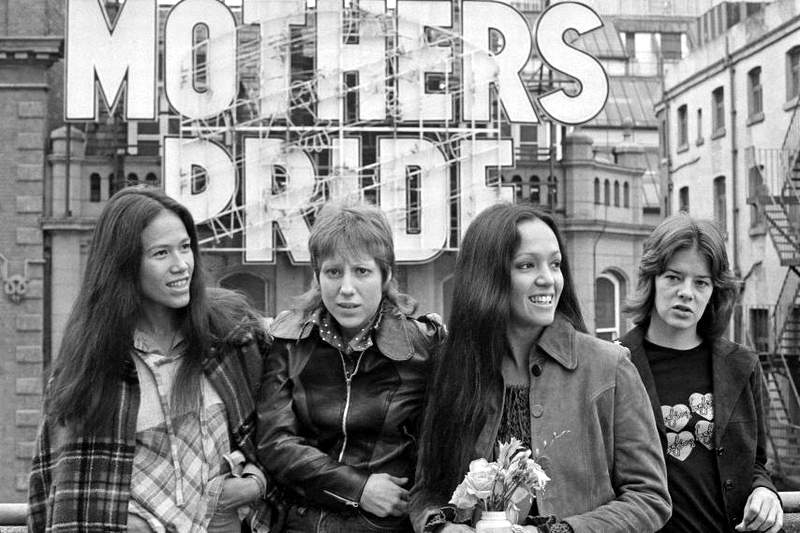
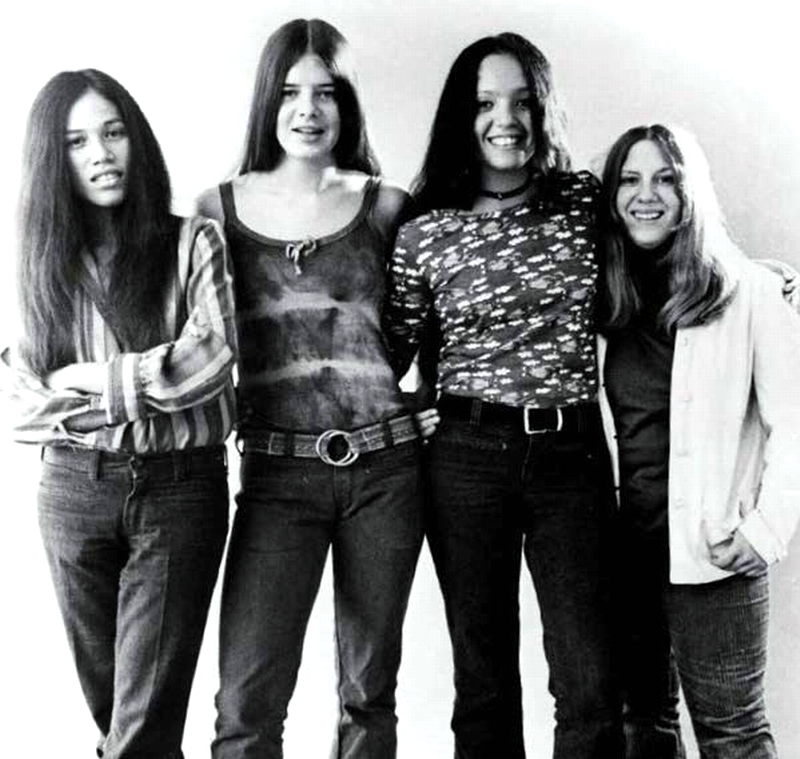
Fanny was the first successful female hard rock group. Despite the ritual chauvinist growls of “Cor, fuckaduck, man, I could fuck that bass player,” and “Not bad for a bunch of chicks,” virtually everyone who saw them came away converted to the joys of Fanny and eager for another dip.
Fanny played an attractive synthesis of Motown-y dance music, hard rock and unsentimental introspection. Alice de Buhr – of the waist-length hair, formidable biceps and wide smile – played tough, uncluttered, powerful drums that sounded very, very refreshing after the interminable thrashings of the latest crop of would-be Bakers.
Jean Millington, slender, dark, wide-eyed and silky, zapped round her Fender Precision bass with admirable clarity and power and sung with impeccable soulfulness. Her sister June, darker, leaner and sharper, played tight, economical guitar lines and left the ass-shaking to Jean.
Lastly Nickey Barclay, hunched behind her keyboards – plump and quizzical with cropped auburn hair – resembled nothing so much as the Nice Girl that your mother wanted you to take out – but who rolled an expert joint as soon as you got her home and then balled you while you were recovering from the shock.
Nickey’s voice and songs were the most outstanding in the group, and her imaginative keyboards provided an admirable foil to the band’s simplicity.
Charity Ball was an excellent album. It was a little lightweight here and there, but where Fanny really got it all on was on gigs. On The Old Grey Whistle Test they were essentially fucked over by a shitty sound mix that drained much of their energy, but with nothing between them and you but a space full of smoke and bodies, Fanny were an unfettered delight, a beautiful band to watch and hear. They got it on. All the way on.
The group’s third album, Fanny Hill, took the band to London and Apple Studios, where Geoff Emrick engineered them. The album contained Barclay’s beautifully constructed rip-roarers What Kind of Lover, Cat Fever and Place in the Country; the Millington’s shuffling, erotic You’re The One, and June Millington’s more reflective, acoustic ballads What’s Wrong With Me? and Thinking Of You.
All the writers in Fanny had very personal styles. Listening to Nickey’s songs – notably Place In The Country – you got the idea that she was incredibly paranoid. The Millington sisters wrote the bouncier, simpler songs.
Following their Mothers Pride album in 1973 (produced by Todd Rundgren), June Millington quit the band in a state of exhaustion and frustration, with de Buhr following suit shortly after. The band soldiered on with Patti Quatro and old friend Brie Howard and signed with Casablanca for an album (Rock and RollSurvivors) produced by Vini Poncia – which Barclay later called “a crock of shit”.
Fanny II imploded just as their single – the doo-wop-tinged Butter Boy (about Jean’s love affair with David Bowie) became their biggest US hit.
June Millington
Guitar, vocals
Jean Millington Bass, vocals Nickey Barclay
Keyboards, vocals Alice de Buhr
Drums Patti Quatro
Guitar, vocals Brie Howard
Drums Cam Davis
Drums