In the beginning, The Beatles – or rather The Quarrymen – were just another group that hoped to make a few records and some money. Clubs didn’t rush to book them. Decca and Pye turned them down. They toured with Helen Shapiro, and she was the star.
Then, as with even the greatest talent, luck stepped in.
A great point in their favour was that they were not just four people but four “personalities”. John was the thinker, Paul the romantic, George the mystic and Ringo the clown – and they were all lovable. Something for everyone, in fact.
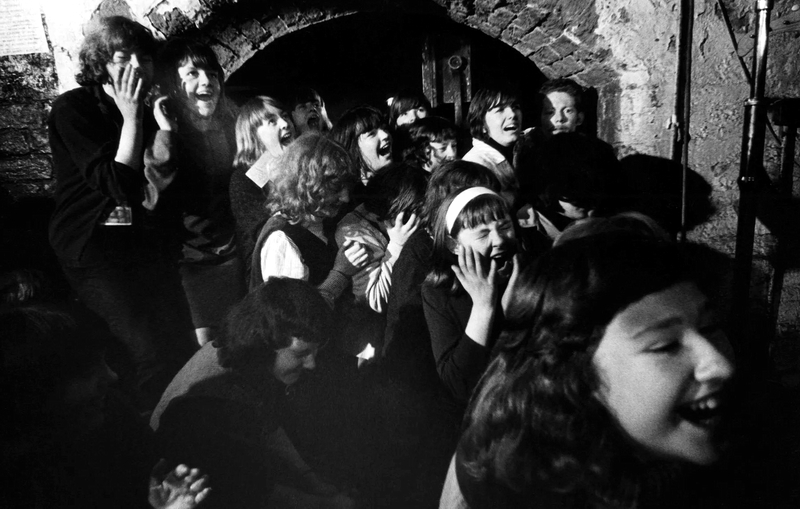
Soon, the names John, George, Paul and Ringo were on the lips of grannies, toddlers, Kings and kids the world over. Girls who went to their concerts began to weep uncontrollably, covered their ears and screamed through the music. Beside them, men and boys shouted with an energy normally reserved only for football matches.
By 1963, the newspapers were calling it “Beatlemania” – and there was no doubt that Britain was in love with The Beatles.
Screaming fans clogged the streets around the London Palladium when the Liverpool rock group starred in a TV show, caused traffic jams at airports – incidentally delaying the new Prime Minister – and bought enough copies of She Loves You to keep it at number one for four weeks.
The “Fab Four” – or “Mop Tops”, as the press dubbed its new heroes – reached their greatest pinnacle yet when they topped the bill at the Royal Variety Performance in London. It seemed even the Royals had succumbed to the charm of John, Paul, Ringo and George. Yeah, yeah, yeah.
British Prime Minister Harold Wilson even sought popular favour by arranging, in June 1965, that they should be awarded the MBE for services to the country’s economy.
But Beatlemania was not to remain a uniquely British phenomenon.
The Beatles flew into Kennedy Airport in New York in February 1964 and met their most ecstatic reception to date. Urged on by disc jockeys, who had been broadcasting constant updates on the progress of Pan-Am flight 101, thousands of American teenagers packed the airport to scream their adulation.
They broke through a police cordon, then formed a Beatles motorcade that followed their heroes all the way to the city’s Plaza Hotel.
The following night, they appeared live on The Ed Sullivan Show, once the springboard for Elvis, which put them into every American living room.
Suddenly, The Beatles were everywhere. Their records decorated the most elegant coffee tables and the grottiest apartments. They were in everything – books, magazines, posters, fashions. There were Beatle suits, cut in the style of their favourite stage outfits – jackets with soft mandarin collars – and Beatles wigs sold like hotcakes.
Everything they touched turned to gold. Anything they endorsed sold. The pillowcases they used in a hotel in Kansas City were cut into 160,000 1″ squares and sold for a dollar each . . .
The Beatles, though, finally grew tired of it all and turned their backs on the people – and that was the beginning of the end.
They started out simple and lovable, but they ended up outrageous. Knowing their every word and act was under the public microscope, the words and acts grew wilder as they searched for new experiences.
John said The Beatles were more popular than Christ. Paul said he’d taken LSD. They got hooked on mysticism with the Maharishi. They did as they pleased because whatever they did, the world still loved them, and gradually, it pleased them to use their wealth for the most elusive luxury of all: privacy.
Gradually, Beatlemania faded as the four of them – all in their different ways – withdrew from the spotlight and went about their own interests.
Video
You May Also Like
Chubby Checker Chubby Checker was originally a slaughterhouse worker named Ernest Evans, but was re-named because of his…
Mal Evans Malcolm Frederick Evans was born in Liverpool on 27 May 1935 to Frederick and Joan Evans…
Toots & The Maytals Frederick "Toots" Hibbert was born in the rural Jamaican town of May Pen in Clarendon in…
Puffball Skirt/Bubble Skirt Also known as the bubble skirt or balloon skirt, the puffball skirt was one of the…
Astrud Gilberto Astrud Gilberto was born Astrud Evangelina Weinert - to a Brazilian mother and a German father…
New Riders Of The Purple Sage By 1969, The Grateful Dead's Jerry Garcia was becoming more and more enamoured with country music and…
Zoot Money's Big Roll Band The most fondly remembered London club act of the 1960s was, perhaps, Zoot Money's Big Roll…
Johnny Hallyday Jean-Philippe Smet was born in Paris on 15 June 1943 to a Belgian father and a…


 But Beatlemania was not to remain a uniquely British phenomenon.
 Everything they touched turned to gold. Anything they endorsed sold. The pillowcases they used in a hotel in Kansas City were cut into 160,000 1″ squares and sold for a dollar each . . .


