On 15 October 1987, BBC weatherman Michael Fish delivered Britain’s most infamous weather forecast.
“Earlier on today,” he said, “a woman rang the BBC and said she’d heard there was a hurricane on the way. Well, if you’re watching, don’t worry, there isn’t.”
He was correct, but he was talking about a storm over the western part of the North Atlantic Ocean. He said it wouldn’t reach the UK and it didn’t. However, a rapidly deepening area of low pressure from the Bay of Biscay did.
Forecasters had flagged the risk of severe weather days in advance, but early models showed the worst of it staying just south of England.
As things played out, though, a clash between unusually warm tropical air and cold polar air forced the warm air upward, creating a deep area of low pressure.
The sharp temperature contrast produced a particularly intense weather system.
Several ingredients made the Great Storm so memorable, but its track was probably most significant. Hitting the south coast, it pushed north and east, reaching the Humber estuary at about 5.30 am on 16 October. This path included densely populated areas.
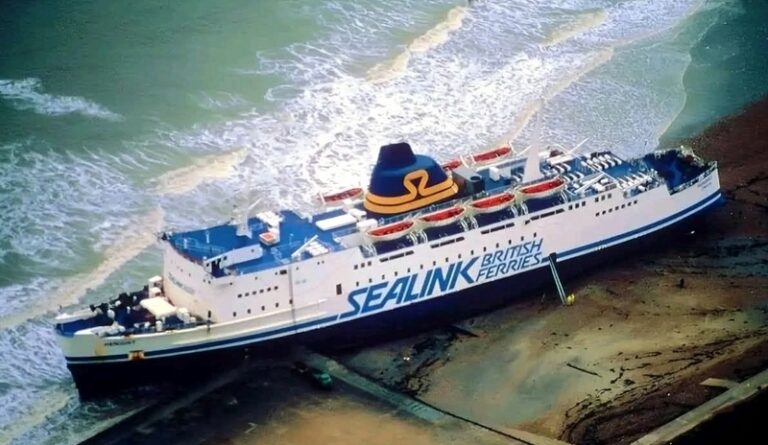
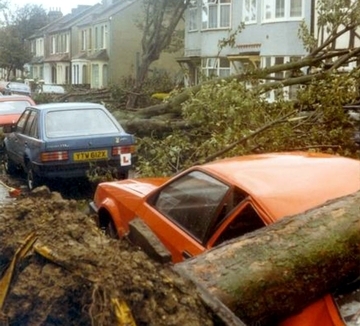
Gusts exceeded 100mph, uprooting 15 million trees, tearing roofs from houses, flattening vehicles and severing power across much of southern England.
One family in Kent recalled waking as “the house shook as though grabbed by a giant hand”. Roads were blocked, trains halted, entire counties were plunged into chaos, and 18 people died.
The highest gust recorded over the UK was 115mph at Shoreham in Sussex at 3.10 am.
Sevenoaks in Kent lost six of the oaks which gave it its name (pictured below) – along with 15,000,000 other trees across the South East.
A Guardian article – “Mayhem brings London to halt” – described how power supplies, telephone connections and transport infrastructure collapsed. It also reported that Woolworths had sold 25,000 brooms and 50,000 candles as people tried to cope in the aftermath.
The storm left a £1 billion trail of destruction from Cornwall to East Anglia, and the apparent mismatch between the forecasts and the storm’s severity sparked national debate.
The Great Storm became a catalyst for investment and improvement in forecasting science, technology, and communication, which has since transformed how the UK understands and responds to severe weather.
After 1987, the Met Office created the National Severe Weather Warning Service (NSWWS) to give government, industry, emergency responders and the public a clear, coordinated system for severe weather alerts. The warnings help people prepare.
Back in 1987, alerts were sent by fax and email to emergency services and media outlets for broadcast on TV and radio. Today, most people receive forecasts and warnings through apps, social media and the web.
Since 2015, storms have been named to provide a shared reference point. The Great Storm stands as a reminder that accurate forecasting saves lives and that, when the worst weather hits, it enters national folklore.


 Forecasters had flagged the risk of severe weather days in advance, but early models showed the worst of it staying just south of England.
 One family in Kent recalled waking as “the house shook as though grabbed by a giant hand”. Roads were blocked, trains halted, entire counties were plunged into chaos, and 18 people died.

 After 1987, the Met Office created the National Severe Weather Warning Service (NSWWS) to give government, industry, emergency responders and the public a clear, coordinated system for severe weather alerts. The warnings help people prepare.


