Australian Anthony O’Grady was a dedicated music fan and had written occasional record reviews for Go-Set and its early rival Soundblast. Ironically, the first encounter he had with future partner Phillip Mason was as an outraged freelancer demanding payment.
Mason was working at Go-Set and offered O’Grady the finance for a new fortnightly music magazine. RAM (Rock Australia Magazine) was born.
The first issue of RAM appeared on 18 March 1975 and had Mick Jagger on the cover. The second edition featured Skyhooks on the front.
At first, O’Grady virtually wrote the magazine single-handedly under a variety of pseudonyms, with his then-girlfriend Annie Beaumont taking the photos.
From the outset, he believed that Australian artists should receive the same attention and gravitas as the international superstars. He also insisted that the Sydney-based tabloid should match its syndicated overseas material (from the NME and Melody Maker).
As a result, many young and keen writers were put through the RAM grinder as O’Grady attempted to convert enthusiasm into writing polish.
His success can be measured by the large number of RAM survivors who went on to successful writing/journalism careers, including Jenny Hunter-Brown, Glenn A. Baker, Annie Burton, Vince Lovegrove, Stuart Coupe, Clinton Walker, Andrew McMillan, Jodie ‘JJ’ Adams, Richard Guilliatt, and Samantha Trenoweth.
The paper did well from the start, primarily because it was in the right place at the right time. Skyhooks were bursting onto the Aussie music scene, Sherbet were filling concert halls, and bands like AC/DC and TMG were commanding large and avid followings.
TV pop showCountdown had also just begun, and new radio station 2JJ was pumping alternative music into Sydney’s airwaves.
Anthony O’Grady left RAM in 1981 and was succeeded as editor by Greg Taylor, who brought in Phil Stafford as assistant editor.
Anthony O’Grady
Stafford eventually bought the magazine and took over as editor.
The rise of the free street press eventually stole a large slice of the magazine’s audience, and although Phil Stafford fought valiantly to keep RAM alive, its time had passed.
After a quick succession of short-lived editors, Stephen Cadbury and Paul Toohey, the magazine folded after its last issue in July 1989.
Anthony O’Grady subsequently wrote for several Australian magazines, produced radio specials and a TV special on Australian rock and put together the first rock music soundtrack to win an Australian Film Institute award (for Street Hero in 1985).
In 1995, he started Australia’s first music tip sheet, The Music Network. His book Cold Chisel: The Pure Stuff, on Australia’s most legendary, enigmatic and enduringly popular rock band, was published in 2001.
In 2005, he wrote and produced a 5-part radio documentary on how an Australia-wide rock & roll touring circuit came of age throughout the 70s.
Anthony O’Grady had a kidney transplant in 2010 after some years on dialysis. His health ultimately failed, and a variety of melanomas led to his death on 19 December 2018.
Video
You May Also Like
New World Portrayed as an Antipodean import, the band was actually largely British; John "Fuzzy" Lee was born…
Black Diamonds, The/Tymepiece The Black Diamonds hailed from Lithgow (NSW, Australia), evolving out of rockabilly band Johnny Kett's Black…
Questions, The (Australia) Aussie band The Questions first attracted attention when they were runners-up in Hoadley's 1967 National Battle…
Sweet and Sour 1 9 8 4 (Australia) 20 x 30 minute episodes Sweet and Sour was like an…
GTK 1 9 6 9 - 1 9 7 5 (Australia) Today, music shows on television are as…
Windrider (1986) Set in Western Australia, Windrider was promoted as a "romantic action film about windsurfing". Unfortunately, there…
Natural Causes (1985) This made-for-TV movie from the Australian Broadcasting Corporation (ABC) had four former university friends reuniting to…
Outbreak of Love 1 9 8 1 (Australia) 3 x 60 minute episodes This odd three-part "comedy of manners" from…


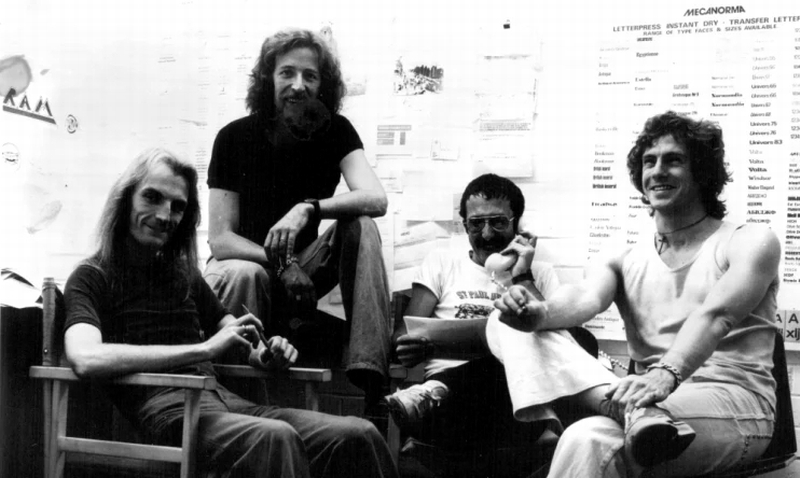
 From the outset, he believed that Australian artists should receive the same attention and gravitas as the international superstars. He also insisted that the Sydney-based tabloid should match its syndicated overseas material (from the NME and Melody Maker).

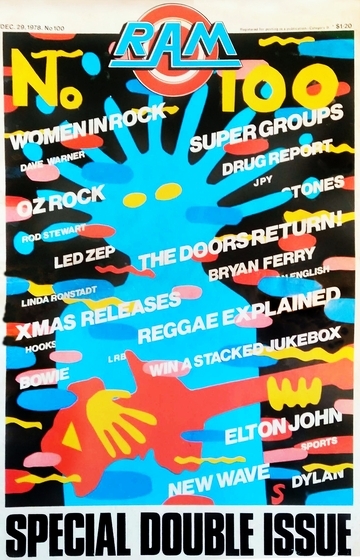 After a quick succession of short-lived editors, Stephen Cadbury and Paul Toohey, the magazine folded after its last issue in July 1989.